Eco-responsible air conditioners: do they really exist?
May 25, 2024



Wall or central? This is probably the first question you ask yourself if you are considering a heat pump. The answer depends mostly on your current infrastructure, budget, and home configuration.
There is no universal “best” choice. A wall-mounted heat pump is not superior to a power plant, or vice versa. Each one excels in different contexts.
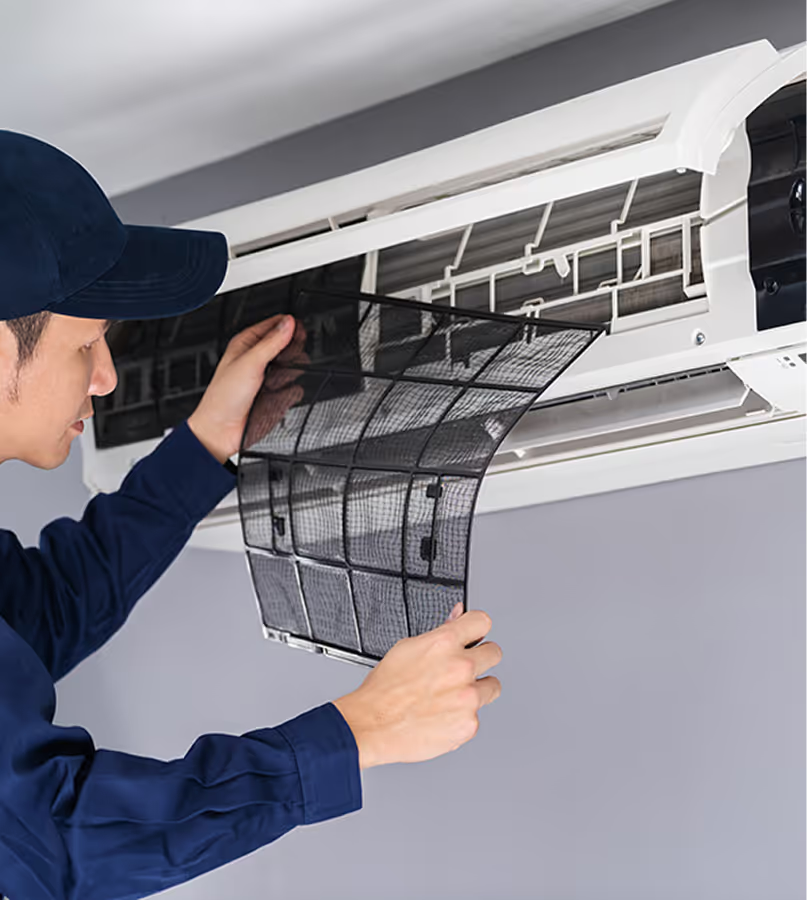
The wall-mounted heat pump Fix one or more units directly to the walls. No ductwork required. Air flows from these units to the rooms.
The central pump works differently. It distributes the air via a network of ducts hidden in the walls and ceilings, exactly like your heating system current if you have one.
Both displace heat instead of creating it. At 8°C outside, they release three watts of heat for every watt consumed — this is the ratio that generates savings.
No ducts? The mural avoids costly renovations. It is suitable in open area for condos, apartments, houses o to air condition specific areas. Multi-zone systems connect multiple units to a single outdoor condenser.
Fast installation, less expensive, control by zone. The unit remains visible on the wall.
Existing pipes in good condition? The power plant distributes the temperature uniformly everywhere, no cold or hot areas. Ideal for multi-storey houses or large areas. More discreet: only the ventilation grills are visible.
First of all, Inspect your infrastructure. Do you have ducts? Are they in good condition or should they be repaired? Afterwards, calculate the area to be covered.
Check what grants are available. Hydro-Québec's LogisVert program offers substantial financial assistance for ENERGY STAR certified heat pumps. It can be a game-changer on your final budget.
Don't choose only according to the price. A cheap appliance can cost you a lot in terms of electricity and repair. Instead, look at the SEER, HSPF and CPSC coefficients.
Never install by yourself. Improper installation voids your warranties and reduces performance. In Quebec, only one contractor with RBQ license can legally install a heat pump.
The dimensions matter a lot. Too powerful or not powerful enough, your heat pump will not work properly. A professional calculate the power according to your area, insulation, ceiling height and climate.

Wall or central? It is not a question of quality. It's a question of adapting to your situation.
Do you have pipes in good condition? The power plant uses this infrastructure that is already in place. No ductwork? The mural saves you from costly renovations. Both heat and cool effectively.
Work with a certified contractor. Check for government grants. Choose a model adapted to the Quebec climate.
At Ventiref, we assess your specific situation before recommending anything. We also take care of the procedures for government subsidies and we guarantee an installation that meets the standards.
Contact us for a free evaluation.


Refrigeration, air conditioning, and heating for all types of buildings on the North Shore.
RBQ: 5801-3202-01